This column aggregates the latest large-model releases and open-source drops from the past one to two days, cross-checked against official announcements and multiple media outlets. Performance figures distinguish between vendor claims and independently verified third-party results; anything not yet replicated is clearly marked. Illustrations are original.
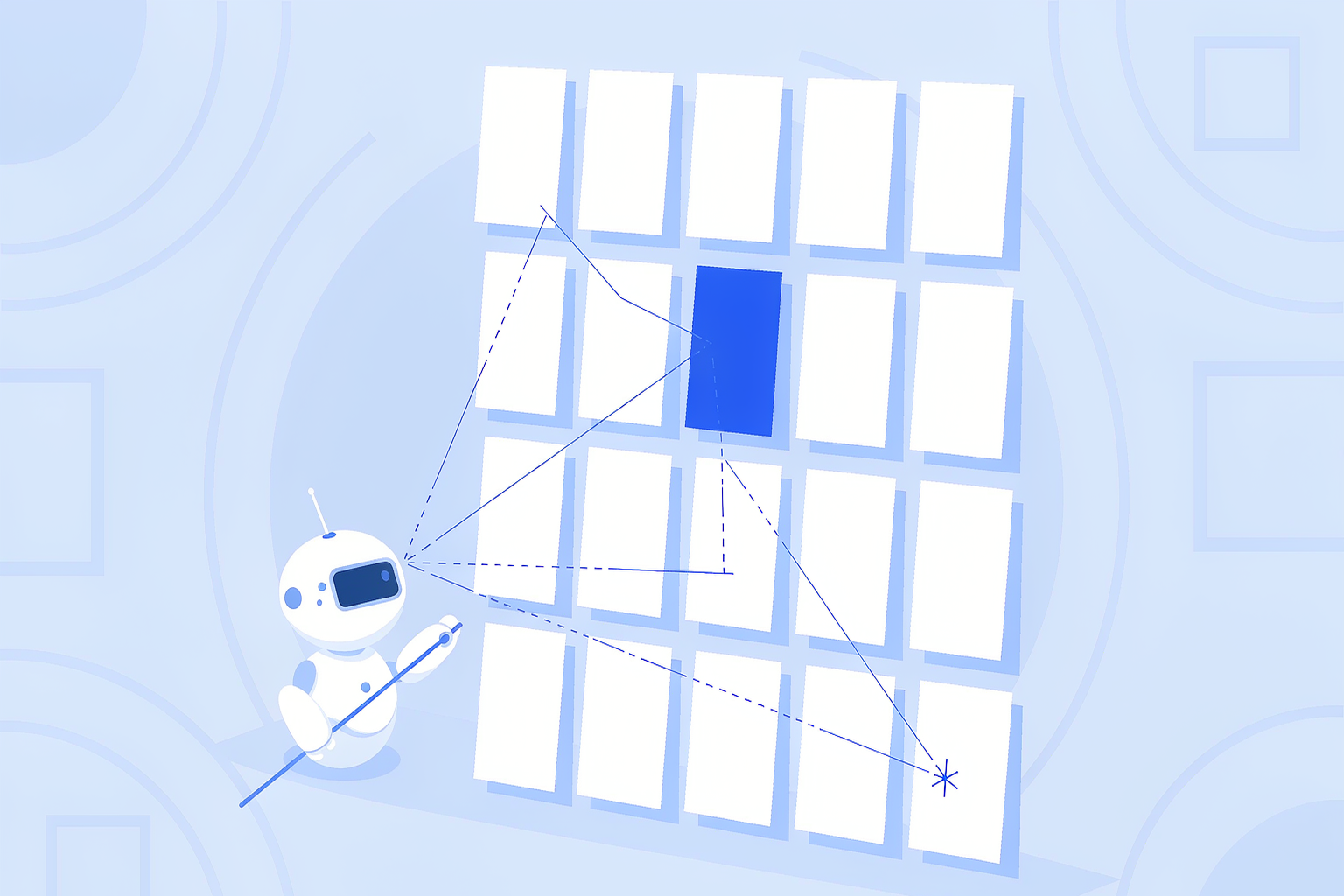
On Nov 11 (US Eastern), Google released Gemini Decision 1 and the Gemini Decisions API it powers, entry in Google AI Studio, with CEO Sundar Pichai personally backing it on X.
First, the difference from a "large model," because it decides how you use it. A normal LLM writes token by token, then you pick the conclusion out of a paragraph; Gemini Decision 1 writes nothing - in one forward pass it scores pre-arranged candidate answers and returns the result, probability, and a 0-1 confidence. In short: it doesn't speak, it only chooses.
Three hard numbers: up to 1,000 questions at once, input up to 256K tokens, $0.10 per M input tokens (about ¥0.67), output completely free - roughly 1/5 of Gemini 3.5 Flash-Lite, the vendor says.
Three native question types: yes/no; multiple choice (2 to 255 options); scoring against a rubric or ordered scale. Input can mix text, image, audio, video, and PDF - a call recording with account data, or a scanned claim form with damage photos.
The money-saving design deserves its own mention: the same input packet bills once, and each question only adds its own few dozen tokens of prompt. Vendor example: one 4,000-token record with 20 fifty-token checks, batched into one request, is ~$0.50 / 1,000 records; split into 20 calls re-sending the source each time, ~$8.10 / 1,000 - a ~16x gap. Latency: median 50-100ms compute, 150-250ms end-to-end, and asking 1 or 100 questions takes nearly the same time.
Vendor scores look great: 5 of 7 shared benchmarks first; JevBench 92.2%, above OpenAI GPT-6 Luna (90.9%) and TypeSafe Jev 1.14 (90.0%). The most convincing metric is calibration error 0.0250, about half of Jev's 0.0494 - when it says "80% confident," it really is ~80%. For automated pipelines that matters more than accuracy: trustworthy confidence is what lets you auto-route low-score batches to humans.
But the third-party ruler flips half the story. On Artificial Analysis's Decision Index v2.1 (18 systems), Gemini Decision 1 ranks only #9, though it takes first in the knowledge and reasoning sub-items:
| Replicated (third-party) | Gemini Decision 1 | Peer |
|---|---|---|
| AA Decision Index v2.1 (18 systems) | #9 | first in knowledge & reasoning, not top-5 overall |
| AA-Paperclip (15 questions/doc, fully-correct share) | 33% | Jev 1.14 35.5%, Nace Drex Max 1.1 63% |
| When2Call (which tool to call) | 75.2% | Drex Max 94.6%, Jev 1.14 80.8% |
In other words: it's cheap, fast, and well-calibrated, but not "the most accurate judge." For batch yes/no, agent routing and guardrails, context scoring - it's a bargain; for hard work like "read a stack of invoices and verify each field," the specialized Drex Max still leads by a wide margin.
This lane opened this year and already has three players. TypeSafe's Jev launched mid-September, passed a million users in days and raised $870M in three weeks at a $7.5B valuation. OpenAI made its Decisions API GA on Oct 22 (backed by GPT-6 Luna). Google is the third and latest entrant, with a clear differentiation: not cheaper on text (Jev is $0.042/M input, half its price), but native multimodality keeps rivals out.
| Model / Product | Date | Type | Highlights |
|---|---|---|---|
| Runway Praxis-1 (open source) | 11-11/12 | World-action model / Apache 2.0 | Worth trying. A 27B "world-action model" - predicts what the frame becomes, then reads the action from the prediction. Video backbone 26.9B / 2.8B active, 17 of 20 feed-forward layers are MoE; action expert a 314M dense Transformer reading the "imagined future frames." Outputs 1.6s / 24 actions (15Hz) + predicted latent; 0.55-0.6s round-trip on one H100. NVIDIA RoboLab-120: 46.2% (555/1200), first among world-action and open robot base models; fine-tuned on unseen RT-1 hardware hits 80.0% (original RT-1 policy 52.4%). Weights + code open, full and LoRA, vLLM-Omni, H100/B200/5090/Jetson Thor. All scores Runway-reported, 1,200-trial scope, no third-party replication. |
| Wenxin Lightning deep-thinking | 11-12 (Baidu World) | App model / Qianfan | Born for Baidu Search: it must eat voice/image/text, reason, call tools, and hold up under massive load. Baidu's in-house BSA (Baidu Sparse Attention) compresses history KV feedback-style during decoding. The concrete number: 30%+ lower inference-engine cost on Kunlun chips, 8 cards per node. The point isn't scores - it's "search-grade concurrency + domestic chips," the piece many C-side teams actually lack. |
| Wenxin Yijing micro-expression | 11-12 | Video generation / Qianfan | A "performance" video model: text + vision + speech tri-modal, up to 4,000-word text drive, fine-grained facial/body/emotion description, long-speech drive with chapter-level dubbing. Vendor: 50% lower cost, minute-level production; the express version does 1:1 realtime. Baidu's short-drama Studio anchor: 0.2 yuan/second. All vendor-reported. |
| ci-proto (open source) | 11-12 | Time-series foundation model / open weights | Five sizes XS-XL; the open XL is 167M params, ~669MB. It reads time-varying measurements and returns predictions - multi-dataset pretraining, zero-shot on unseen datasets, vs per-dataset ARIMA/VAR. Output is 9 quantiles (0.1-0.9) per target per step for risk planning. Custom license: research and commercial allowed with attribution and notice. |
| Tencent Yuanbao Search | 11-12 | AI search product | Search as a standalone product (so.qq.com + QQ Browser). Index covers web, WeChat Official Accounts, Channels, academic literature - 10B+ index, ads clearly separated. For content teams, the bigger story: Official-Account content is first indexed as a first-class citizen by a general search engine. |
| Qwen Code 1.0 Preview (open source) | 11-11 | Agent runtime / Apache 2.0 | Alibaba merges Qoder's mature Harness into Qwen Code (branch v1.0.0-preview). Four things: "hand-brain separation", event bus to multi-node distributed, sandbox pooling (kills the costly re-init), unified model/MCP config governance. Also ships native installers (no Node.js). No scores, no GA date, preview API may change; the "cost savings" is vendor-claimed, unverified. |
Models are being split into parts and priced by call type. You used to have one interface - generate, then pick the answer out of text. Now there are three: generate (expensive, slow, creative), judge (dirt cheap, fast, multiple-choice only), and verify (find mistakes). Gemini Decision 1's $0.10 and free output essentially says "you don't need to pay for a paragraph, you only need to pay for a conclusion." But the third-party list gives the other half: it ranks #9, and specialists still lead on hard work - so the real play isn't "replace the big model," it's split the pipeline so the most expensive segment only handles the 10% that truly needs generation.
(Data from official announcements and public reports, 2026-11-12; vendor claims and third-party results are marked separately, with unverified items noted in the text. Model capability affects selection, but actual pricing follows the model plaza in real time.)
GPT-6.2 cuts list prices 20%, yet platform discounts run deeper: gpt-6-astra trades at under 1% of list. What this week's AI price war means for buyer
Prompt caching stores a repeated prompt prefix and bills cache reads at 5-12% of normal input. Real prices, hit conditions, and how to cut your API bi
Twelve Claude versions are on sale. The newest opus-5-5 costs $8.91 a month; the oldest opus-4-6 costs $49.50. Full table and a pick for each workload
gpt-5.6-terra and deepseek-v4.1-flash win on price and reliability; gemini-3.8-flash is fastest. Effective prices, measured speed, and a three-tier pi
Point your base URL at the platform and one key covers all 138 on-sale models across 51 vendors, in both OpenAI and Anthropic request formats. Copy-pa
 LONG AI